OSV Crane & DP Ops: AI in Abu Dhabi Fields
The Margin for Error is Zero
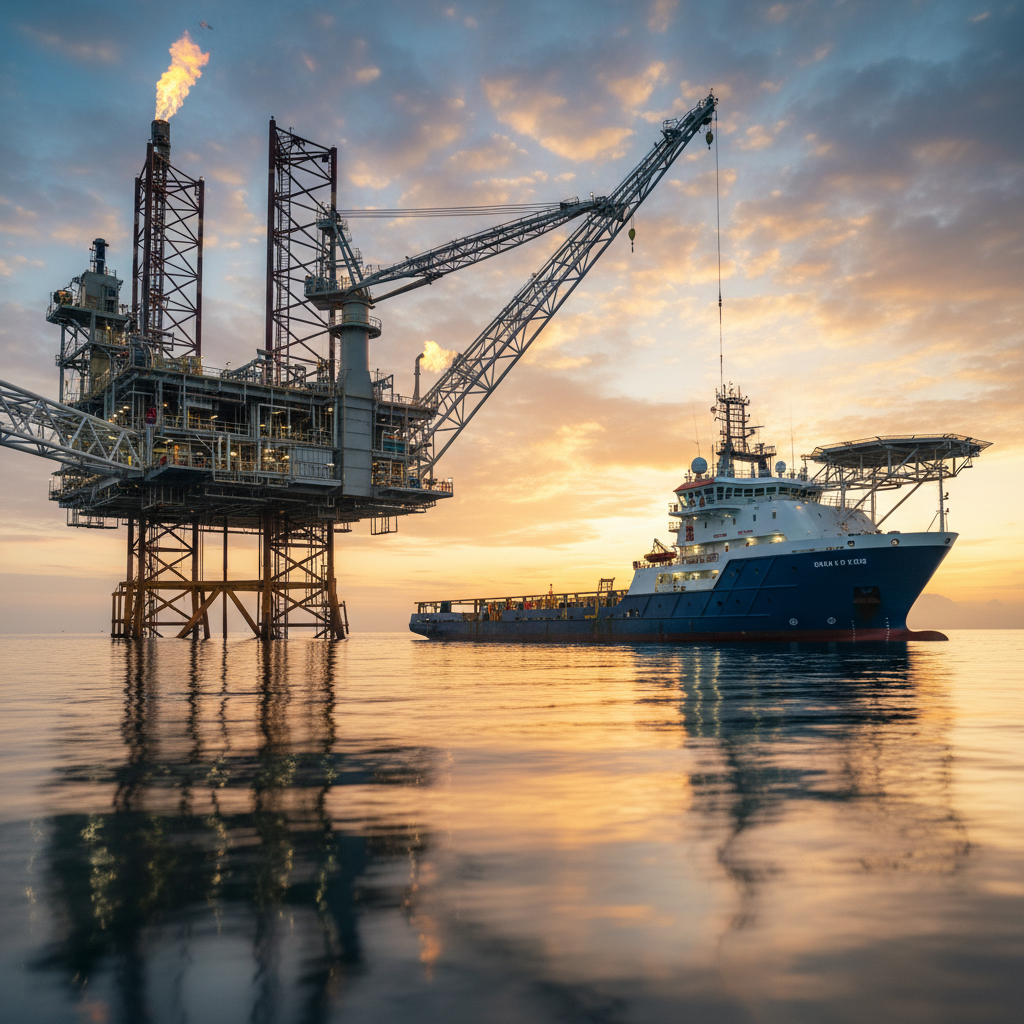
For an OSV Captain holding a position a few meters from an ADNOC platform in the Umm Shaif field, “good enough” doesn’t exist. The same is true for the crane operator lifting critical cargo worth millions onto the platform deck. In the demanding offshore environment of Abu Dhabi, precision, safety, and efficiency are not just goals; they are the absolute baseline for survival and profitability. Yet, many operators in the UAE and across the GCC still rely on outdated methods for managing two of the most critical and fuel-intensive aspects of offshore support: crane operations and Dynamic Positioning (DP).
The traditional approach—relying on crew experience alone, manual logs, and lagging indicators—leaves significant value on the table. A single hour of unnecessary DP idling can burn over 250 liters of MGO. A failed lift due to un-forecasted vessel motion can delay a project by a day, costing upwards of $70,000. These are not hypothetical numbers; they are the daily reality for fleet managers in Mina Zayed and the technical superintendents overseeing assets from Singapore. The challenge is clear: how can you move from reactive problem-solving to proactive, data-driven operational intelligence?
Beyond Telemetry: The Power of Context
Operational intelligence is not just about collecting more data. Your vessels already generate gigabytes of it—from the DP system, the engine control room, the crane’s load sensors. The real breakthrough comes from synthesizing this data in real-time and, crucially, adding context. This is what separates simple monitoring from true intelligence.
Imagine your vessel is on DP standby near a jack-up rig. A standard system tells you the thrusters are using X amount of power to counteract Y amount of current. An intelligent system does more. By integrating historical vessel performance data with real-time hyper-local weather forecasts and the specific operational profile of that field, it can advise the DPO that by shifting position by just 10 meters, they can reduce thruster load by 15% without compromising safety. This isn’t a guess; it’s a calculation based on thousands of similar data points, predicting the outcome with over 95% accuracy.
This shift is what platforms like Helmsman by Sailorscope are pioneering. We’re moving the industry from a rear-view mirror perspective to a predictive, forward-looking one. For operators in the competitive UAE market, this is the difference between winning and losing the next charter contract.
Optimizing Crane Lifts with Predictive Analytics
Offshore crane operations are a ballet of physics and skill. But even the best operator is at the mercy of the elements and vessel motion. A sudden, unpredicted roll can put lives and equipment at risk. While motion reference units (MRUs) provide real-time data, operational intelligence puts this data to work proactively.
By analyzing the vessel’s RAOs (Response Amplitude Operators) and combining this with hyper-local wave and wind forecasts for a specific block offshore Abu Dhabi, an AI-powered system can create a highly accurate “vessel motion forecast.” This tells the Captain and crane operator not just the current sea state, but the likely roll, pitch, and heave characteristics for the next 60 minutes. The system can then define clear operational envelopes: “Green” for safe lifting, “Amber” for proceeding with caution, and “Red” for ceasing operations.
This delivers tangible benefits:
- Maximized Weather Windows: Instead of waiting for a clear gap in the weather, you can identify and utilize short, predictable lifting windows with confidence, potentially increasing operational time by 3-4 hours on a given day.
- Reduced Standby Time: Eliminate the costly guesswork of "waiting on weather." The system provides a data-backed justification for proceeding or waiting, which is invaluable for client communication and managing project timelines.
- Enhanced Safety: By providing a clear, predictive view of vessel motion, you remove subjective judgment from the safety equation. This is critical for preventing incidents and demonstrating a proactive safety culture to clients like ADNOC or QP.
The Fuel Cost of Holding Position: DP Intelligence
Dynamic Positioning is a marvel of marine engineering, but it’s also a voracious consumer of fuel. For many OSVs in the GCC, DP operations can account for over 50% of their total fuel consumption. The difference between efficient and inefficient DP holding isn’t a matter of knots, but of kilowatts—and it adds up fast. A 10% improvement in DP fuel efficiency on a single DP2 vessel can easily translate into savings of over $150,000 per year.
Operational intelligence tackles DP fuel burn by analyzing the three key factors: environment, equipment, and operator. The system learns the unique "DP fingerprint" of each vessel in your fleet. It knows how Vessel A responds to the shamal winds common in the Arabian Gulf versus how Vessel B, with a different thruster configuration, behaves in the same conditions.
This deep understanding allows the system to provide actionable recommendations. It might suggest an optimal heading to minimize thruster load or flag a poorly performing thruster that is drawing more power than its peers, indicating a need for maintenance long before it fails. It can even benchmark DPOs, not to be punitive, but to identify best practices from your most efficient operators and use that data to train the entire fleet.
For a fleet manager in Dubai or a technical lead in Singapore, this provides an unprecedented level of control and insight, turning the black box of DP operations into a transparent, optimizable system.
It’s time to equip your crews and shore-side teams with the tools they need to perform at the highest level. By embracing operational intelligence, you’re not just installing new software; you’re fundamentally upgrading your decision-making process, leading to safer, more efficient, and more profitable operations offshore Abu Dhabi and beyond.
Ready to see how much you could save? Explore our dedicated solutions for offshore intelligence and fuel optimization to begin your journey.