
Mastering the Standstill: DP-2 Vessel Efficiency
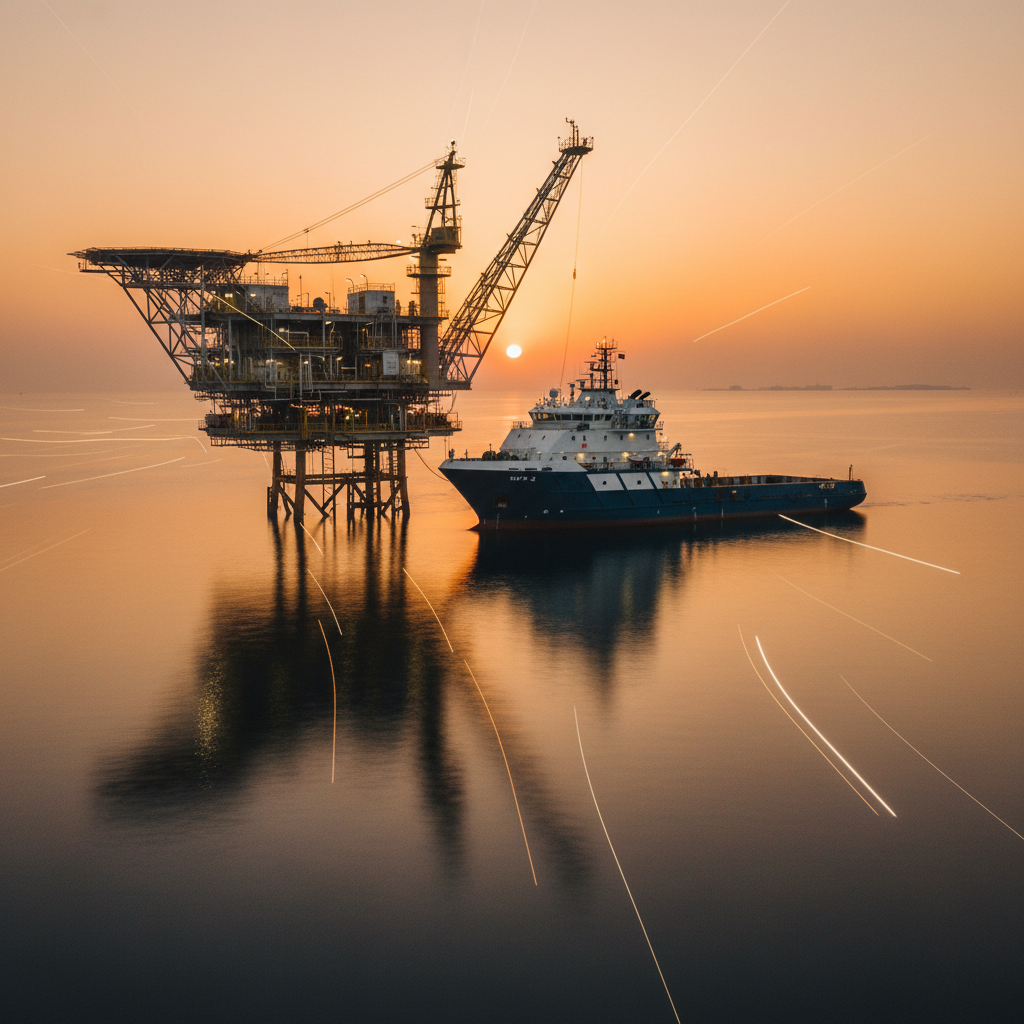
''' In the congested, high-stakes offshore fields of the UAE—from the mature Zakum to the bustling Umm Shaif—the ability for a DP-2 vessel to simply hold its position is the cornerstone of every operation. But at what cost? For too long, the maritime industry has accepted station-keeping as a fixed operational expense. The reality is, the chasm between a “good enough” hold and a truly efficient one can represent hundreds of thousands of dollars in wasted fuel per vessel, per year.
As technical and fleet managers in the UAE, GCC, and Singapore, we are under constant pressure to optimize operating expenditures (OPEX) without compromising safety. The redundancy of a DP-2 system is non-negotiable, but the efficiency with which it operates is a massive, often-untapped, source of savings.
The Silent Drain: Quantifying DP Inefficiency
A typical 80-90 meter Platform Supply Vessel (PSV) operating on DP-2 in the Arabian Gulf can consume between 4 to 6 metric tons (MT) of Marine Gas Oil (MGO) per day, purely on station-keeping activities. With MGO prices at the Port of Fujairah hovering around $750 per MT, this translates to $3,000-$4,500 per day, just to stand still. Annually, that’s over $1.5 million spent on holding position.
Analysis of operational data from hundreds of DP vessels reveals a startling truth: a significant portion of this consumption is pure waste. We consistently see a performance gap of 10-18% between the most and least efficient vessels of the same class, and even on the same vessel from one DPO to another. This isn’t a rounding error; it’s a critical operational bleed.
Beyond Redundancy: The Myth of the Automated System
The core purpose of the DP-2 classification is fault tolerance. The system is designed to withstand the failure of any single component—a thruster, a generator, a reference system—without losing position. However, this safety-centric design does not automatically equate to operational efficiency. The default settings are often overly conservative, leading to a state of perpetual, low-level inefficiency.
The common "set-and-forget" approach to DP operations is a primary culprit. Once the vessel is stable on location, the focus shifts to the mission—be it ROV support, platform supply, or accommodation services. The DP system itself is left to its own devices, often burning excessive fuel in the process.
Unpacking the Core Inefficiencies
Where does this waste originate? It’s not one single factor, but a combination of interconnected issues that compound over time. Our analysis across fleets in the GCC pinpoints several key areas:
- Excessive Spinning Reserve: The most common issue. To ensure redundancy, DP systems demand a certain level of "spinning reserve"—available power that can be brought online instantly. However, many vessels run with far more generators online than necessary. Running three generators at 30% load instead of two at 45% is significantly less fuel-efficient due to the specific fuel oil consumption (SFOC) curve of the engines. This alone can account for a 5-8% fuel penalty.
- Thruster ‘Fighting’ and Allocation: Suboptimal thruster allocation logic is another major power drain. In choppy seas or strong currents, the DP system can command thrusters to work against each other—one pushing starboard while another pushes port—to maintain a precise heading. This "fighting" consumes megawatts of power to achieve a net-zero result, causing unnecessary wear and tear and fuel burn.
- Environmental Model Tuning: A DP system’s effectiveness hinges on its mathematical model of the vessel and its ability to predict the impact of environmental forces. If the model is poorly tuned, the system will constantly over-correct. It might react aggressively to cyclical wave action rather than focusing on the steady-state forces of wind and current, resulting in agitated thruster use and wasted power.
- The Human Factor: The skill and system familiarity of the Dynamic Positioning Operator (DPO) remain critical. An experienced DPO who understands the nuances of their vessel’s specific DP system can manually adjust parameters, de-select a struggling position reference system, or advise a slight change in heading to dramatically reduce thruster load. This proactive management is a world away from passive monitoring.
The Unique Challenges of the UAE and GCC Offshore Environment
Operating in the Arabian Gulf presents a unique set of challenges compared to the North Sea or the Gulf of Mexico. The waters are shallow, leading to more complex hydrodynamic interactions. The high water salinity and temperature can affect thruster and engine cooling efficiency. Furthermore, the extreme density of subsea and surface infrastructure around fields demands pinpoint accuracy, often discouraging operators from experimenting with more efficient (but potentially less stiff) DP settings.
Operations based out of key hubs like Jebel Ali, Mina Zayed, or Singapore for regional deployments require a robust understanding of these local conditions. A DP system optimized for the North Atlantic will not perform optimally off the coast of Abu Dhabi without careful tuning.
The AI Co-Pilot: From Raw Data to Actionable Intelligence
This is where maritime AI platforms provide a breakthrough. By ingesting high-frequency data from the DP system, vessel sensors (MRU, gyro), and the Power Management System (PMS), AI-powered solutions can build a near-perfect digital twin of the vessel’s performance.
Instead of relying on gut feeling or end-of-day reports, this technology provides real-time, actionable intelligence. It can identify that a third generator is running unnecessarily, quantify the cost of thruster fighting in real-time, and provide specific recommendations to the DPO and shoreside management. For instance, it might suggest a 5-degree heading change that could reduce total power demand by 400kW, saving 2 MT of fuel over 24 hours.
This isn't about replacing the DPO; it's about empowering them with a co-pilot that can analyze thousands of data points per second. This turns a complex optimization problem into a series of clear, data-backed decisions. The result is a consistent reduction in station-keeping fuel consumption, often in the range of 8-15%, turning a major cost center into a competitive advantage.
If you are serious about reducing your fleet's operational expenditure and environmental footprint, it’s time to look deeper into the data your vessels are already generating. Moving beyond the simple promise of DP-2 redundancy to embrace active efficiency management is the next frontier in offshore operations. Explore how AI-driven analytics can transform your fleet at Helmsman by Sailorscope or see how it fits into a broader cost-saving strategy on our [/fuel-optimization] page. '''